If you’ve been following my blog for a while, you know that many of my topics are inspired by what’s happening in my own life. Today’s post is no exception. I just returned from my annual trip to the doTERRA Convention, it's always such a great time of learning and renewal. This year, one of the newly released products caught my attention. It’s something I’ve heard about often but had never actually tried myself. So, as usual, I’m writing from a place of curiosity—diving into research and personal discovery—and I’m excited to share what I’ve learned with you.
From ancient tombs to modern wellness routines, castor oil carries a story as rich and layered as its texture. We’ll explore its fascinating history, its many versatile benefits, and spotlight the brand-new
doTERRA Castor Oil—what makes it stand out—and then dive into practical recipes (often paired with essential oils) for skin, hair, and wellness support.

A LONG, RICH HISTORY
Castor oil has been known and utilized for millennia, almost as old as Frankincense (3000 B.C.). Archeological evidence places castor oil or castor seeds in ancient Egyptian tombs dating back to 4000 B.C. It was used as a lamp oil, for cosmetic and medicinal purposes.
In classical antiquity, Greek and Roman physicians noted its use as a laxative and for skin and hair health. In Ayurvedic medicine and traditional Indian history, castor oil has long been valued for its abilities to alleviate constipation, support joint or muscular discomfort, and nourish skin and hair. Over the centuries, its use spread around the world: in African and Caribbean herbal systems, in traditional Chinese medicine, and among folk healers globally.
By the 18th century, castor oil had entered European pharmacies as a standard medicinal oil for laxative and topical applications. With industrialization, castor oil’s use expanded beyond health and beauty—today it’s also used in plastics, lubricants, coatings, inks, and polymers because of its unique chemical structure.
However, even with its long, rich history, many (myself included) still don’t realize just how versatile, and how effective, this one oil can be, especially when sourced and processed with care.
WHY CASTOR OIL WORKS
The standout feature of castor oil is its high content of ricinoleic acid (about 85–95%), a rare monounsaturated fatty acid with a hydroxyl group. That hydroxyl gives the oil a unique polarity and makes it a mild humectant (retaining moisture) and emollient (sealing in moisture). Castor oil is also relatively thick, which helps it form a protective barrier and slow trans-epidermal water loss.
Beyond hydration, castor oil is associated with:
- Anti-Inflammatory & Analgesic Properties (helpful for joint discomfort, sore muscles)
- Antimicrobial & Wound-Healing Support (in topical applications)
- Laxative Effects when ingested (though with caution)
- Support for Hair & Scalp, by coating hair shafts, sealing split ends, improving shine, and promoting scalp health (via improved circulation)
That said, it must be emphasized that internal/medicinal uses require caution, correct dosing, and professional consultation. Overuse as a laxative or for induction of labor is risky and not broadly recommended without medical supervision.
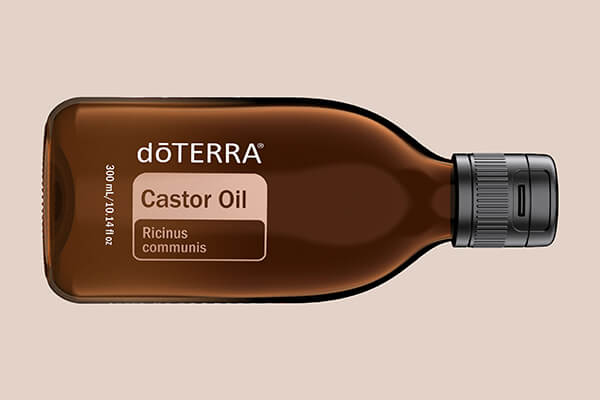
SPOTLIGHT ON doTERRA CASTOR OIL
On Thursday, September 18, 2025 doTERRA introduced its own Castor Oil as part of its wellness lineup.
Primary Castor Oil Benefits:
- Deep hydration and nourishment of skin for a soft, smooth appearance
- Support for healthy-looking hair and scalp
- Use in castor oil packs (a topical compress method) for soothing and comforting effect
Primary Castor Oil Uses:
- Apply 1-5 drops of Castor Oil topically to moisturize and revitalize the skin.
- Massage Castor Oil into the scalp with Rosemary and Peppermint essential oils to nourish hair and roots.
- Use one to two tablespoons as part of a castor oil pack routine over the abdomen or where needed.
- Use Castor Oil topically with Yarrow|Pom and Frankincense essential oils for facial care.
- Apply Castor Oil to the navel as part of a wellness routine.
As with all of doTERRA’s products, the sourcing and impact matter. For the doTERRA Castor Oil, it’s sourced in Gujarat, India – about 80% of the world’s castor oil comes from smallholder farms in India. Seeds are cold-pressed, hexane-free, and tested for contaminants. It takes 450 to 500 seeds of the Ricinus communis plant to produce one 10oz (300mL) bottle of castor oil. That means that doTERRA’s certified organic castor oil is helping over 1,000 smallholder farmers who use non-mechanical harvesting methods to produce the oil. These farmers are trained in sustainable practices which boosts crop yields, income for the farmers and resilience of the plants.

CASTOR OIL RECIPES & USE IDEAS
Here are some common, practical recipes and usage ideas (always start with a patch test if you have sensitive skin).
Hair & Scalp Nourishing Treatment
Ingredients:
- 1 tbls castor oil
- 1 tbls lighter carrier oil (e.g. jojoba, grapeseed, fractionated coconut)
- 2 drops Rosemary essential oil
- 1 drop Peppermint essential oil (optional)
Method:
Warm the oils gently (e.g. in your palms or briefly in a warm water bath). Massage into scalp, working outward through your hair to the ends. Leave on for 30 minutes to overnight (use a shower cap). Wash out with mild shampoo (you may need to shampoo twice).
Benefits: Rosemary supports circulation and hair-follicle stimulation; Peppermint gives a cooling boost; castor oil provides deep moisture and seals the shaft.
Overnight Brow & Lash Conditioner
Ingredients:
- 1 drop castor oil
- ½ drop (or a toothpick dab) Frankincense essential oil (optional)
- Clean spoolie or cotton swab
Method:
Dip the spoolie or swab, apply to brows or lash lines before bed, and leave overnight. This supports hair conditioning and may help with breakage.
Joint & Muscle Comfort Pack
Ingredients:
- 2 tbls castor oil
- 2 drops Marjoram essential oil
- 1 drop Lavender essential oil
- Flannel cloth, soft cotton rag or reusable castor oil wrap
- Plastic wrap or a waterproof barrier
Method:
Saturate the flannel cloth with the oil blend. Place over the sore joint or muscle (e.g. knee, lower back). Cover with plastic wrap (to trap heat, if not using a wrap) and a warm cloth or heating pad. Leave for 30–60 minutes. Wipe area clean
This approach (a “castor oil pack” or "castor oil wrap") is traditional in herbal medicine for enhancing topical absorption and providing localized comfort.
Spot Moisturizer
Ingredients:
- 3 drops castor oil
- 5 drops Jojoba or Argan oil
- 1 drop Lavender or Blue Tansy essential oil
Method:
Mix in a shallow bowl and apply as a nutrient-rich facial oil, especially on dry patches or areas needing repair. *Note you can oversized glass roller bottle with crystal rollerball for convenient use.
Rich Facial Moisturizer
Ingredients:
- 20 mL Castor Oil (deep hydration + barrier protection)
- 25 mL Jojoba or Argan Oil (lighter, balances and nourishes skin)
- 5 mL of Essential Oils Total (about 25–30 drops depending on preference):
- 10 drops Lavender (calming, soothing, great for skin repair)
- 5 drops Yarrow|Pom (soothes redness, supports healthy skin tone)
- 5 drops Frankincense (rejuvenating, promotes youthful appearance)
- Optional: 2–3 drops Helichrysum (for scars, spots, or skin renewal)
- Alternative: You can use 25-30 drops Immortelle Anti-Aging blend - an undiluted combo of Frankincense, Sandalwood, Lavender, Myrrh, Helichrysum and Rose.
Instructions:
Add essential oils directly into your clean 50 mL roller bottle. Pour in the castor oil (thicker base oil) about halfway, then top off with jojoba or argan oil. Add the rollerball topper and cap, then gently shake to blend.
To Use:
Roll a thin layer over dry patches, scars, or fine lines. For facial moisturizer: roll onto fingertips and massage gently into skin. Best used at night since castor oil is rich and may feel heavier under makeup.
Castor Oil Pack for Digestive Comfort
Ingredients:
- 1 tbls castor oil
- Flannel cloth/Castor oil wrap
- Plastic wrap (if using flannel)
- 2 drops DigestZen essential oil
Method:
Soak flannel in castor oil add DigestZen essential oil, place on abdomen, cover with plastic wrap and apply gentle heat (hot water bottle or heating pad) for 20–30 minutes. *Note: you can just use castor oil or you can simply rub DigestZen (undiluted) into belly or lower abdomen.
 BELLY BUTTON CASTOR OIL PATCHES
 This is a traditional method where castor oil is applied directly over the belly button, believed in Ayurvedic and folk practices to influence overall balance and wellness because the navel is a central point with many blood vessels. It’s suggested to do this 2-3 times per week for ongoing support. You can do it for as little as 30 minutes or wear the patch overnight.
To use the
belly button patch, simply apply 3-5 drops of castor oil to the center of the pad, wait about a minute for the oil to absorb into the cloth, add desired essential oils for targeted support, the place the patch over the belly button. Additionally, you can apply a warm or cold compress to enhance the experience and desired effects.
ADDITIONAL ESSENTIAL OILS TO PAIR WITH CASTOR OIL
PRECAUTIONS & BEST PRACTICES
- Patch test first. Even though castor oil is generally gentle, it’s always a good idea to patch test for sensitivity or allergic reactions.
- Avoid ingestion without research. Internal use (e.g. as a laxative) must be done with caution or under professional guidance. Overuse can cause cramping, diarrhea, and hydration issues.
- Avoid during pregnancy (unless under guidance). Because castor oil has been used historically to induce labor, it is not advisable for general use in pregnant women without medical supervision.
- Use quality oil. Look for cold-pressed, hexane-free, tested-for-purity oils. That’s one of doTERRA differences – sustainable sourcing, third-party testing and same CPTG Certified Pure Tested Grade standards as their essential oils.
- Dilute for comfort. Because castor oil has a thicker, sticky consistency, mixing it with lighter oils (jojoba, argan, fractionated coconut) helps ease absorption and reduce greasiness.
- Consistency matters. With hair or skin routines, periodic use over weeks is more likely to show benefits than a single intensive treatment.
Castor oil is one of those timeless natural oils whose reputation is deeply rooted in history, yet whose relevance continues today thanks to its unique biochemical properties. As a humectant (retaining moisture), emollient (softening/soothing), and skin/sealant agent, it supports skin, hair, joint comfort, and more—especially when paired wisely with essential oils.
Whether you’re using it as a warm scalp mask, a soothing joint pack, or a spot treatment for repair, the trick is choosing purity and using it intentionally.
xoDanette